
Applying for a job usually means two documents, not one: a resume and a cover letter that actually match it. Doing both by hand for every posting is exhausting, which is why an AI resume generator that also drafts a matching cover letter has become the fastest way to send a complete, tailored application. Paste your experience and the job description, and the tool produces a resume plus a companion letter that speaks to the same role in the same voice.
This guide covers why a matching cover letter still moves the needle, how AI builds one from your resume and the job posting, what a strong letter includes, and how to edit the draft so it sounds like a real person wrote it.
Why a matching cover letter still matters
Cover letters are far from dead. Recent hiring surveys report that roughly 83% of hiring managers still read them, and many recruiters use the letter as a tiebreaker between similar candidates. Nearly half say a strong cover letter can convince them to interview someone whose resume looked only average.
The most persuasive evidence comes from a field experiment by career-research firm ResumeGo, which sent more than 7,000 real applications and tracked callbacks. As their report put it:
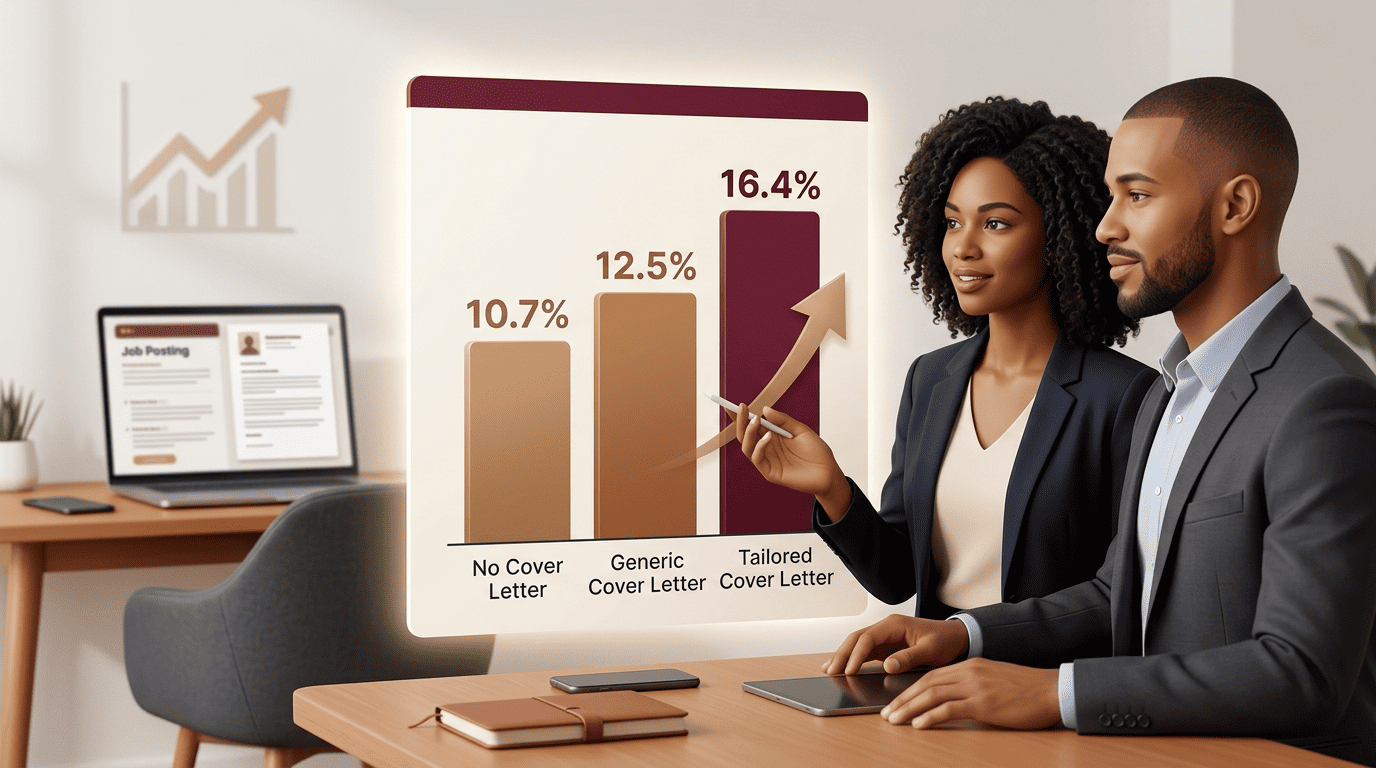
“Job seekers who included a tailored cover letter had a 16.4% chance of getting an interview, compared to 10.7% for those who didn’t include a cover letter at all.”
A generic, one-size-fits-all letter landed in the middle at 12.5%. The lesson is clear: the letter only helps when it is tailored to the specific job, and that is exactly the part AI makes effortless.
How an AI resume generator builds a matching cover letter
The workflow is short because the tool already has everything it needs once your resume and the target role are in front of it. Most generators, from Kickresume to Grammarly, follow the same three steps:
- Add or upload your resume. The generator reads your experience, skills, and achievements straight from the file so you never retype them.
- Paste the job details. Drop in the job title and the full job description. This is what lets the AI tailor the letter to that specific posting instead of writing something generic.
- Generate and review. In seconds the tool returns a resume and a companion cover letter that reference the same accomplishments and keywords, ready to edit.
Because the letter is built from the same source data as the resume, the two documents stay consistent: no mismatched job titles, no achievements that appear in one but contradict the other. If you want the resume side of that pairing tuned to a specific posting first, our guide on using an AI resume generator built from a job description walks through it step by step.

What a strong AI-generated cover letter includes
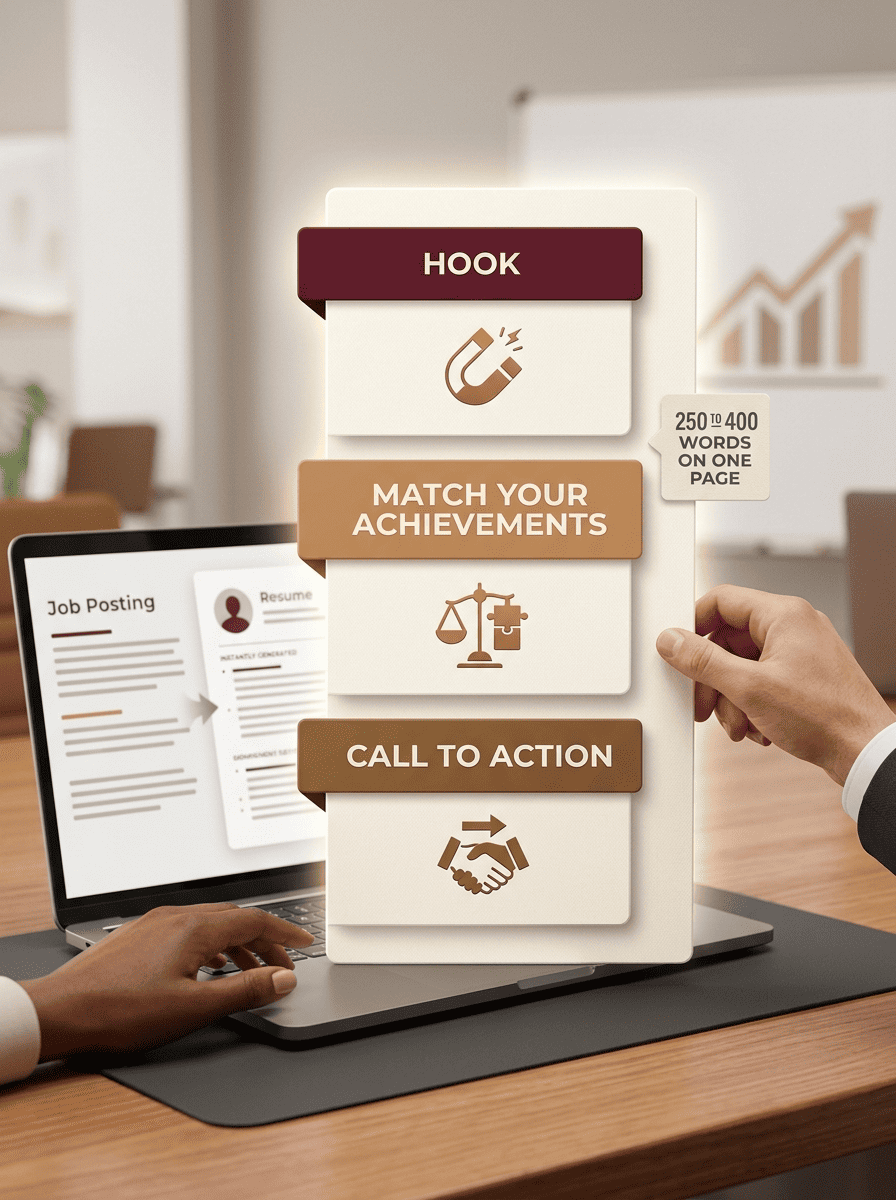
A good letter is not a rehash of your resume in paragraph form. According to guidance from tools like Enhancv, an effective cover letter is short and structured, usually 250 to 400 words on a single page, and built around three moves:
- A hook. One or two sentences that name the exact role and company and state why you are a fit. Generic openers like “I am writing to apply” get skimmed past.
- Proof that maps to the job. The middle connects two or three concrete achievements to the requirements in the posting, ideally with numbers. This is where you show, not tell.
- A confident close. A short call to action that invites the next step, plus a professional sign-off.
A well-built AI resume generator with cover letter follows this shape automatically, then lets you swap in stronger examples. Harvard Business Review advises that a cover letter should “explain why you are the perfect person for the position” rather than summarize your history, a job the tailored middle paragraph does best.
Tailoring the letter to the exact job description
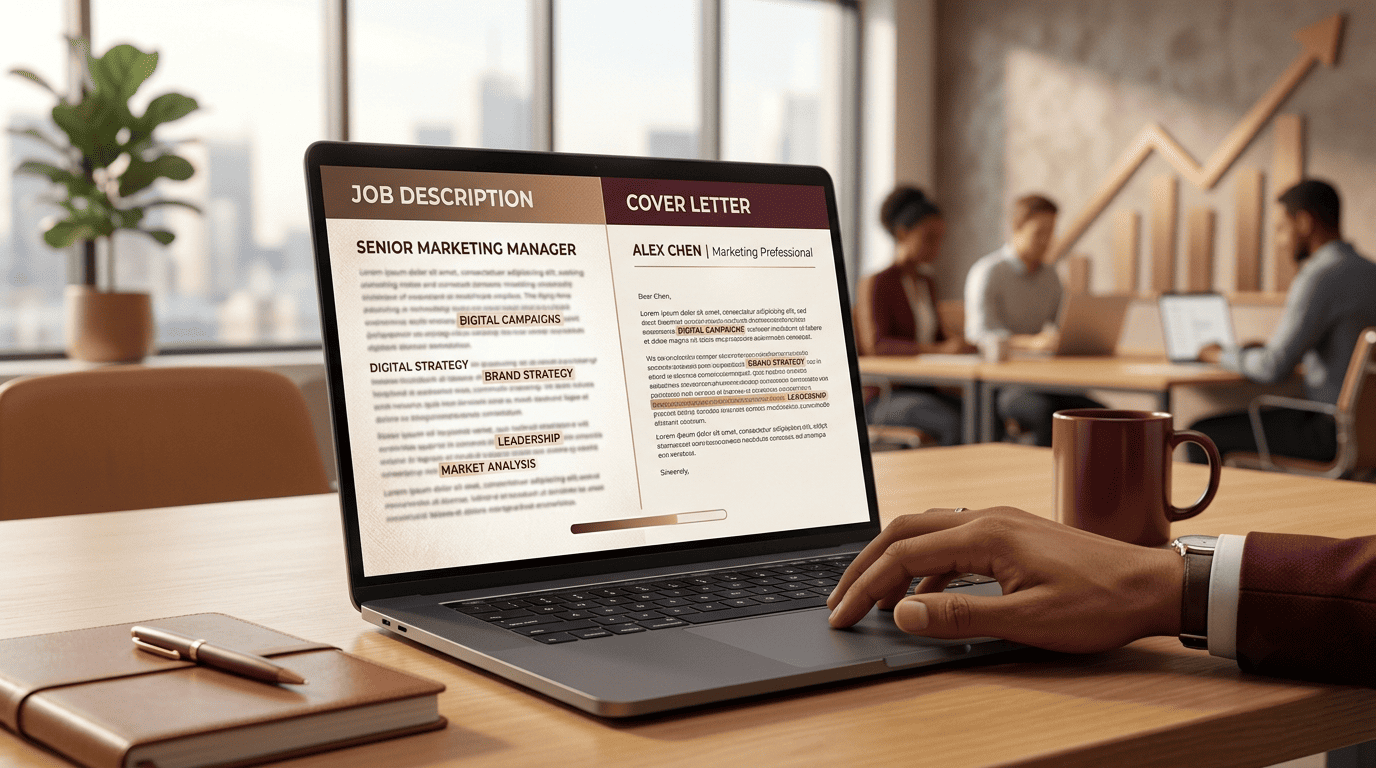
Tailoring is what separates the 16.4% callback letter from the 12.5% one. When you paste a full job description, an AI-powered resume generator can pull the language the employer actually used, the priority skills, the tools, the phrasing, and weave those terms into the letter so it reads as a direct response to the posting.
This matters for two audiences. Applicant tracking systems and recruiters both scan for role-specific terms, so echoing the posting’s keywords keeps you relevant. Just as important, mentioning the company’s mission or a detail from the listing signals genuine interest rather than a mass-send. If a job asks for “cross-functional project management,” a tailored letter names that skill and points to a time you delivered it, instead of talking about your career in the abstract.
Editing the draft so it sounds like you
AI gives you a strong first draft, not a finished one. The generators that recommend their own output, including Grammarly and Enhancv, all say the same thing: the letter improves when you add specifics only you know. A few minutes of editing makes the difference:
- Replace vague claims with real numbers. “Improved efficiency” becomes “cut invoice processing time by 30%.”
- Cut the fluff. Delete any sentence that could appear on anyone’s letter. If it is not specific to you or this job, it is filler.
- Add one human detail. A short line about why this company or mission appeals to you is hard for AI to invent and easy for a reader to feel.
- Read it aloud. If a phrase sounds stiff or robotic, rewrite it in your own words.
Treat the AI output as a fast, structured starting point that removes the blank-page problem, then make it yours. If cost is your main concern while you experiment, you can start with a free AI resume generator and upgrade only if you need advanced features.

Common mistakes to avoid
Even with a capable AI resume builder tool doing the heavy lifting, a few habits sink cover letters:
- Submitting the draft untouched. Recruiters recognize generic AI phrasing. Always edit.
- Repeating the resume line by line. The letter should add context and personality, not duplicate the application for employment documents you already sent.
- Ignoring length. Going past one page or under a couple of short paragraphs both hurt. Aim for that 250 to 400 word sweet spot.
- Forgetting to swap details between applications. If you reuse a letter, double-check the company name and role every single time. A misplaced company name is an instant rejection.
FAQ
Can an AI resume generator write both my resume and cover letter at once?
Yes. A generator that includes a cover letter feature builds both from the same inputs, your experience plus the job description, so the resume and letter stay consistent in wording, dates, and achievements. You review and export them together.
Is an AI-generated cover letter good enough to send as is?
It is a strong draft, not a final one. Career tools and recruiters agree the best results come from editing the AI output: adding real numbers, one personal reason for wanting the role, and cutting anything generic. Budget a few minutes to personalize before you send.
Do employers still read cover letters in 2026?
Most do. Recent surveys put the share of hiring managers who read cover letters around 83%, and a ResumeGo field study found tailored letters raised interview callback rates to 16.4% versus 10.7% for no letter. They still matter, especially when tailored.
How long should an AI cover letter be?
Keep it to a single page, roughly 250 to 400 words. That is long enough for a hook, two or three achievements that match the job, and a short close, and short enough that a busy recruiter will actually read it.
Will using AI for my cover letter hurt my chances?
Not if you edit it. Problems come from sending unedited, obviously generic drafts. When you tailor the letter to the posting and add specifics only you could write, AI simply saves time on structure and first-draft wording while the substance stays yours.
Should I tailor the cover letter to each job?
Absolutely. Tailoring is the single biggest driver of results. Pasting the full job description lets the AI mirror the employer’s priorities and keywords, which is why job-specific letters outperform generic ones in callback studies.